Monday, October 17, 2011

Catching Hummingbirds......or not.

click on image to enlarge

      "How do you shoot hummingbirds?" That's the question I get all the time. Apparently, lots of folks have a very difficult time trying to capture hummingbirds in flight. So I thought I would take a few minutes to share some of my strategies for making hummingbirds freeze in the air.
      Let me just try to explain the photo above. To begin with, hummingbirds are not attracted to lilies, but they are attracted to the feeder that is hanging above the lilies, but out of the frame. Secondly, auto-focus does not work well when it comes to tracking hummingbirds. They are just too fast for most auto-focus systems. The solution is to carefully place your feeder and your flower so that you can prefocus on the stamen of the flower. By setting your shutter speed to 1/2000 th of a sec. and raising your cameras' ISO to accommodate that shutter speed, your ready to begin.
    Most modern DSLR's provide a burst shooting rate of at least 5 frames per second. Set the camera up to utilize this fast shooting rate and practice firing a few quick bursts. Check the focus and the depth of field you're achieving. I generally like to shoot at f.8, which gives me enough depth of field to capture the action. Using a 300 mm. lens, I can almost always get the kind of shot I am after. Occasionally, I find I need a bit longer lens, which may cause me to pull out a 400mm. Your lens choice is an important factor in the results you are going to achieve. Don't waste your money on cheap glass. The real quality of a photo comes from the lenses, not the camera.
     Good luck with your shots. Let me know how it works for you.

Friday, October 14, 2011

Using Fall Color in Your Photographs


Click on Image to enlarge


     Fall is the season we all wait for after suffering through the heat of summer. Fall brings the cool air and the colors of the season that can present wonderful photographic opportunities. With the cool air comes the migration of countless species of birds to the mountains and woodlands of eastern Tennessee. It's the time of year when all of us want to play hooky from our jobs and our lives to go out and enjoy the natural world. For me, as a photographer, it's the time of year when the air gets clearer and the photo ops abound. It's the time of year that beckons me to pursue the hunt of birds and backgrounds.
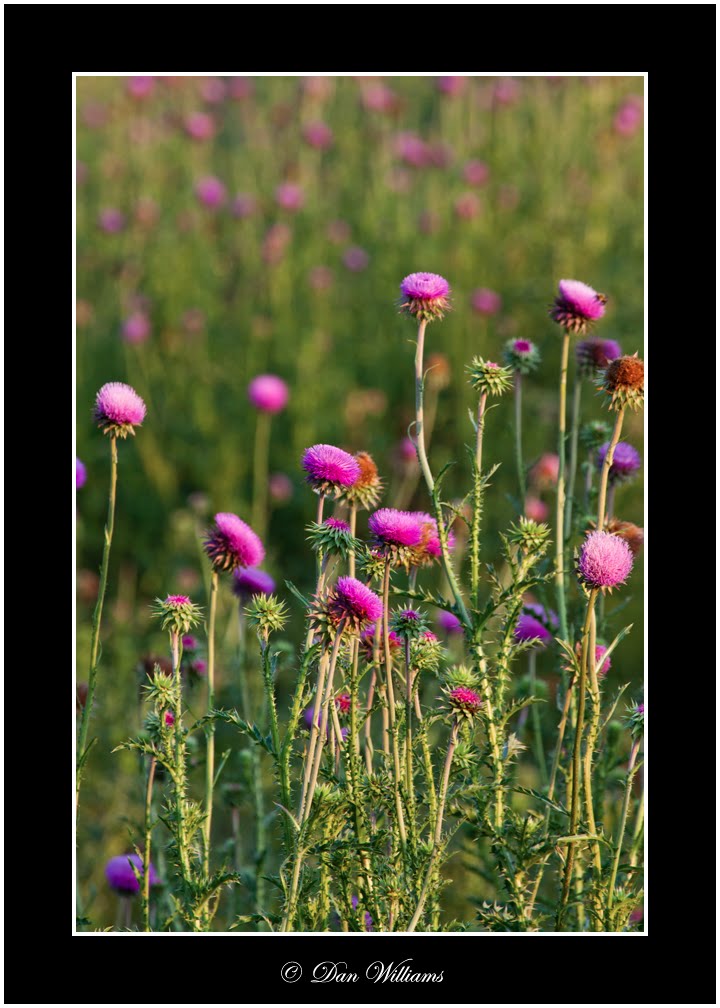
     The warm hues of fall color can make an otherwise mediocre shot more interesting to the eye. Fall weeds become beautiful gardens, and leaves become nature's decorative backdrops. It seems like everywhere you look there is some kind of photo just waiting its' turn to be taken. Here in the Smokies, we have the joy of seeing so much color and so much wildlife,  all combining to create unlimited photographic opportunities. With the smallest effort, one can capture scenes worthy of print and display. Regardless of where you make your home, Fall is the season to get out and explore. It's the season to renew your love of the outdoors and to bring home images to share with friends and family. So grab your camera, play hooky for a day, and remind yourself why we're on this planet. Life is for the living.......and the joy of life comes from the depth of living we allow ourselves to experience. Capture some images and hang them on the wall to remind you of this everyday. You'll  smile every time to look at them.

Tuesday, August 16, 2011

Landscape Bird Photography


click on image to enlarge


In one of my previous posts, I talked about how photos should cause the viewer to ask questions. I think it is important to lead the viewer down a road that suggests further exploration of the subject depicted in the photo. It's never enough to simply put a beautiful picture in front of someone. Without provoking a reaction, the photo has not succeeded. An artist needs to find a passageway into the mind of the viewer. As a bird photographer, it's important to me that my audience never leave my work with the singular thought that they have just viewed a "bird photograph." I simply never understand photographers who seem to think that their chosen subject is enough to satisfy an educated public. Whether you choose to photograph animals, pottery, automobiles, sports, or whatever else might catch your fancy, you need to find a way to take your work to a level that goes beyond what the viewer is accustom to seeing. In my case, when it comes to photographing birds, I seek to find birds in places and in situations that evoke an emotional response from my viewers. Often times it's as simple as putting the long telephoto away, and reaching for a wide angle lens. Immediately, the photo becomes something "else". Suddenly we are looking at birds in a new way. Rather than the typical bird closeup, we are drawn into the photo in a search for the subject. When this occurs......it's mission accomplished.


Monday, July 11, 2011

Compositional Bird Photography

click on photo to enlarge


For those of you who are regular visitors to my blog, you have certainly picked up on the fact that my bird photos are different from most of those you have seen before. Unlike many bird photographers, my shots rarely single out the bird as the main, if not only subject of the photo. Instead, my images are much more about an environment containing a bird, than just the bird itself. My goal has always been to exhibit photos that raise the question, "Is this picture about the bird, or is it about the habitat in which the bird resides?" In composing my shots, it is that question that is always at the forefront of my thinking. It's the question that I ask of myself, and that I hope the viewer is also asking of him or her self in viewing my photos. If photography is to truly be an art form, I feel that images must provoke the viewer to ask questions of the image. Where is this place? Why did the subject choose this place to perch or feed? Why does my eye follow the subject within the frame? Where is the light source coming from in this image? How did the photographer manage to capture the image? Why did the photographer choose this particular frame to print?


I think photography earns its' place in the art world, when it goes beyond simply recording a moment in time. I believe a photographer enters the world of fine art, when his images provoke discussion and create some degree of controversy. I continue to work everyday to keep my work aimed at those standards.


Tuesday, June 21, 2011

Bluebirds in the Neighborhood


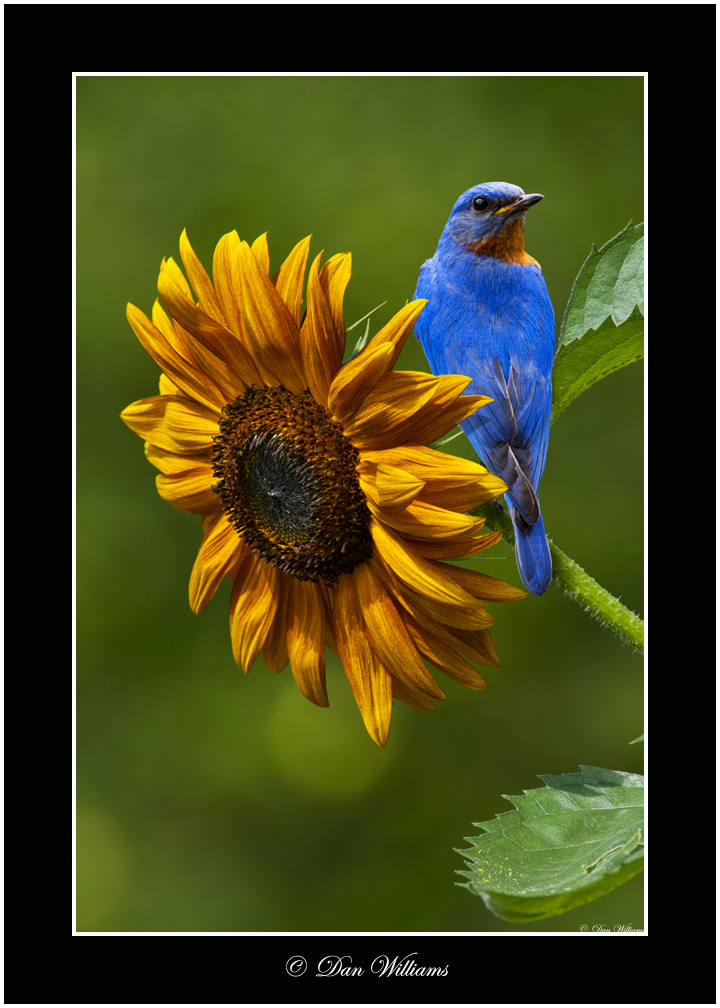
It's a wonderful thing to be able to look out into the backyard and see Bluebirds flitting about. The flash of their bright blue feathers is always a welcome sight. This summer, here in southeast Tennessee, we have had an abundance of Eastern Bluebirds, which is refreshing after four years in a row with very few. None of us seems to have any real explanation for this years' increased numbers, but we're thrilled to have them.


Needless to say, their presence has been wonderful for this bird photographer. Not only are they here in large numbers, but they seem much more approachable this season than any I can recall. With minimal effort on my part, I have been able to get dozens of photos that meet my personal standards for genuine fine art photography. It's been a real joy, and I am grateful for the time I have had with these remarkable little birds.


My resident backyard pair is now working on their second hatching, and it looks like this year we'll certainly see at least three nestings. Even with the extremely hot conditions, this pair of birds seems determined to reproduce as many young as the season will permit. For me, that means more photo opportunities, so check back with us often and I'll continue to share this adventure.


Thursday, June 2, 2011

The Secret to Locating Birds


I get ask all the time, "How do you find so many birds in those interesting places?" Well, it really isn't that difficult if you take the time to learn about birds, and you're willing to spend lots of time in the field. Like so many things in life, it pays to know your subject well. In that regard, I have spend most of my life studying birds and paying attention to their habits. The knowledge that I have gained from this endeavor has made my job so much easier, and so much more enjoyable. I love what I do, and I love the time I spend with the birds.


Knowing where and when birds feed is key to my success as a bird photographer. I spend as much time looking for food sources as I do searching for birds. Finding locations where birds like to feed is critical to successfully capturing the kind of images I want. Knowing when birds are most likely to feed is another piece of the puzzle that aides me in my quest. Birds tend to feed more in the early mornings and late afternoons than any other time of day. Concentrating on those times is much more productive. Immediately following a thundershower you can find increased bird activity, and that can mean finding great shots.


You can waist so much time looking for birds, but if you think about food sources and feeding behaviors you can greatly increase your own odds of making some great shots.


Friday, May 13, 2011

Nature Photography.......With elements of Man


Click on photos to enlarge


Many years ago, actually much longer that I care to remember, I read an article by one of the nation's top nature photographers. In that article, he made this statement, "Nature photos must never show the hand of man." Like many nature and wildlife photographers, the author believed that true nature photography should not contain anything that would show the presence of man. I think that may well be a mantra of many photographers today, but it is not one that I believe has any meaning for me.


We live in a world that is becoming increasingly populated everyday, and the "hand of man" is certainly a part of our everyday lives. I believe that nature photos should show us all of the story, not just the most pristine elements of the natural world. I believe that as we adapt to our surroundings, so do our animal and plant friends. Excluding images that show us mans encroachment upon nature would be like showing us only pictures of farmers and not of people living in major metropolitan cities. People have adapted and so has the animal kingdom. Granted, we still like to see "animals in the wild", but I think we need to see animals living connected to man as well.


With that thought in mind, I love to capture images that use objects created by man to highlight my wildlife subjects. Rather than detract from the image, I often feel they can add interest to a photograph. I think they can dramatically enhance a compositional element, and make a connection between the wild subject and the viewer. In this regard, I think we bring the viewer closer to our subject and make the image relate to a wider audience.


There will, of course, always be those who feel that man has no place in a nature photo, but my personal belief is that man is just one more species living on this planet we call earth. We are just as much wildlife as any other species, and we can learn so much from observing the natural world around us, and all the elements included in that world.


Click on Photos to enlarge.


Thursday, May 12, 2011

Making Directional-lighting Work for You


I am always disappointed with images that look flat. Images captured without some kind of directional lighting leave me wanting more, and I rarely even bother firing the shutter when I don't feel some kind of emotional response to my light source. Photography is all about capturing a subject in some kind of meaningful, if not magical, lighting situation.


When it comes to bird photography, we are working with soft little round subjects that really need to be lit in some special way that will enhance the natural form and texture of the bird. Without this kind of lighting, our subjects can easily be lost into the backgrounds. While my photos very often try to make the surroundings just as important as the bird, I still want my birds to be focal points within the photo. To make that happen, I need lighting that brings the viewers eye to the soft feathers of my main subject.


Sometimes, no matter how hard I try, I just can't make an image pop. If I don't have the lighting I need, I know my image is going to be disappointing, and I might just as well not shoot. Yes, we have the ability to do so much now in post-processing, but nothing can replace the impact of original lighting. There is just no denying that truly great photos are all about light. I hope all of us can keep that in mind as we struggle to make those magical images we dream about.

Wednesday, May 11, 2011

Research and Planning the Shot


For many years, I carried my camera around looking for great shots. Then one day I discovered that I had a new skill .........I could design a shot........I could anticipate a shot.........I could wait for a shot..........I could allow my vision to be realized on film, and that was the day that I became a photographer. After years of hoping for the shot, I discovered that I could scout a location and make plans for a shot that was pre-visualized in my mind. From that point on my images took on a new sense of passion, and the excitement for me as a photographer grew immensely.


This shot of Harris Neck Wildlife Refuge was taken at dawn, after making several previous trips

to the refuge without any meaningful images. The location drew me over and over again, but my timing was never right. It seems like something always managed to prevent me from getting the shot I wanted. Then, one evening while sitting in my hotel, I saw an image in my mind of what I wanted from this location. I asked myself, "What would you do if you were painting this scene?" Instantly, I began composing an image in my mind of what my painting would look like and asking myself how I could get it in the camera. I knew the light was the key, and that sunrise was going to be my best chance of capturing the birds in the rookery. That meant getting on location early and using a small portable blind. While still dark, I hiked into the marsh, set up my blind and waited. As daybreak came, so did my shot. Perhaps not exactly as I had pictured it in my mind, but very close.......and maybe even better.


My images today are not usually "by chance." Rather, most of them are well thought-out and planned. In doing so, I make myself aware of light and of composition. I place myself in a ready position that is going to give me the scene I want, and I wait for the light. Sometimes I get to click the shutter, but so many times I simply enjoy the morning without getting the shot. Not every outing has to produce a winner. Sometimes it's enough to just enjoy what's in front of you.