Saturday, July 27, 2013

What Makes a Winner?
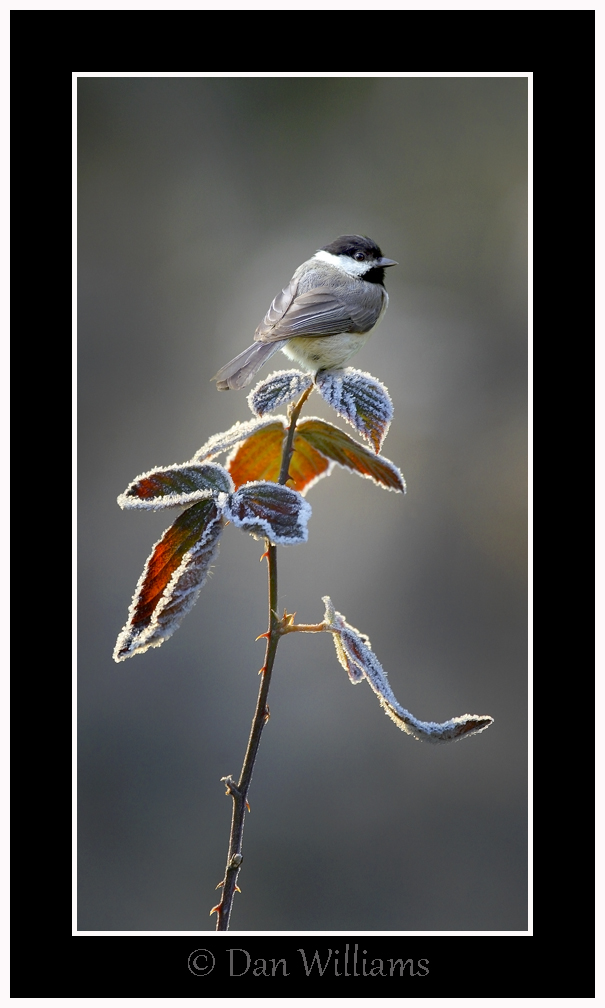
 
     What you see above is a photograph that I took several years ago. It was captured early one winter morning in a pasture area that adjoins my yard. It's one of those photos that I didn't have to work very hard to get, but it has been one of the most popular images in my entire collection of bird photographs. In fact, it would easily rank in the top five selling images within my entire library of photos. But, why this image?
      I'm  making this post as a result of so many requests from photographers. I get this question all the time. "Why are your images so popular with the public, and why do some of your shots continue to sell year after year?" Well, that's a tough one, and it's not a question that I can fully answer here in a few short paragraphs. But, I might shed some light on the subject by simply discussing this image.....a classic shot of a Chickadee.
      As most of us know, good photography starts with good light. Directional light is imperative to any successful image. Without a strong sense of light, most images lack what I call "punch." Light is what sets the mood of a photo, and without it an image cannot tell a complete story to the viewer. Simply put.....this backlit image has punch.
      This image also has a wonderful tonality about it. The soft shades of gray become defined by the warm tones of red and orange that appear in the frozen blackberry branch. Without these hues of color, the image would appear flat and not nearly as interesting to the eye. Also, the frost on the leaves catch the light and further define the branch by increasing the overall contrast within the composition. It's actually the frost that helps the viewer identify the light source.
      Finally, the small Chickadee presents us with a focal point, but it does so without "stealing the show." What do I mean by that statement? For years now, I have worked hard at creating images that show us birds in a way that allows us to appreciate nature, and I mean all of nature. Sometimes a clump of weeds can be just as interesting as a colorful hummingbird. Sometimes that which surrounds our subject......becomes our subject. In the image above, our little chickadee shares the spotlight with a simple frozen blackberry branch. Both equally share the spotlight. While the softness of the bird stands in dramatic contrast to the icy, thorn covered branch, they actually compliment each other in a way that only nature can show us.
      So....back to our original question. Put another way, "Why has this image remained so popular for so many years?" My best guess is this......It's a wonderfully simple composition that doesn't confuse the viewer with distracting elements for the sake of  "detail." Its' limited color palette is calming to our senses. It's frosty leaves make us feel winter, but its' powerful morning light gives us hope for a warmer day. This image shares its' story without making us dig too deep, and I suspect it will be doing just that for many decades to come.
       Let me end with this. Fine art photography is a tough field. It's highly competitive, and that's a good thing for all of us. Success is this field is measured in so many different ways, but for those of us who support our families with our images, sales cannot be ignored. Photographers can improve their personal sales by elevating the quality of their images. Sharp, clear, vibrant "snapshots" cannot compete in this field of endeavor. The public wants more, and successful photographers are presenting images that reach a much higher standard. I would encourage everyone to have a good hard look at your own images and assess if they are individually telling a complete story. If not.....work is needed. Good Luck. 

Wednesday, June 19, 2013

Shooting Hummingbirds

 
      As many of you already know, I spend allot of time photographing hummingbirds. They have long been one of my favorite species, and I love the challenge of catching them in flight. Thankfully, digital imaging has made the task much easier than just a few years ago. Thanks to the development of increasing low noise digital sensors, we now have the ability to shoot images at very high iso's with very little digital noise. Those higher iso's have enable us to shoot at incredibly high shutter speeds, which are demanded by this kind of photography. Typically, I shoot hummers at 1600 iso, and I try to achieve a shutter speed of between 1/2000 th of a sec. to perhaps 1/4000th of a sec. The shot above falls somewhere in the middle.
      I'm often ask if I use either a flash or filters to get the job done. The answer is neither, as I don't like the effect of a flash, nor do I like filters, as I think they tend to degrade my images. I try in all cases to capture my images without adding anything to the lens or lighting. I just feel it gives a more natural feeling to the photograph. Others may disagree.....this is simply my personal approach.
      Fortunately, I live in an area of the country where we are blessed with lots of hummingbirds. My gardens are generally buzzing with them all summer. However, that is not to say that I don't employ the use of feeders to attract even more. In fact, I have lots of feeders that can be easily moved around the gardens. These feeders are extremely helpful in bringing the hummers to areas of the garden that have the most flowers in bloom. The above photo came about by moving several hummingbird feeders into a area of the garden filled with Iris. While hummers aren't especially attracted to Iris' for feeding, my feeders brought the birds to the Iris and I managed to capture some interesting images. Very few photos come from luck alone. Good photos are generally well planned in advance, and then executed with skill and patience........at least that is my take on it. Enjoy your photography.

Saturday, June 15, 2013

Revisiting Old Photos


        It's time to have another look at some of our old photos. Images that you may have stored away, thinking they weren't up to par, may surprise you when you reprocess them with new updated software. Lately, I have been going through some of my older files and taking a second look at images that disappointed me just a few years ago. Fortunately, I still have many of those images, and I am now thrilled with them, after seeing them reprocessed with todays' software. If you haven't tried this yet, don't wait any longer. Some of those images that are buried deep in your old folders may turn out to be some of your new prize winners.
 
       The latest versions of software converters make it easy and efficient to get the most from our files. For example, the latest version of Lightroom (Adobe) can take an old file and make it sparkle. With all of the software improvements, you won't believe the quality that has been hiding within your files. Could well be that you're a better photographer than you think. I suggest you pull out a few of the those old images and run them through a new converter and see just how good you really are. I think you'll be surprised. 

Thursday, June 13, 2013

What Makes a Photo So Popular?


     It's always been a bit of a mystery to me as to why some photos seem to have such mass appeal, while others, some of which I think are great, simply do not.  The photo above has been one of my most sought after images for the past two or three years, and it seems to have something special that the general public finds appealing. It's been one of those images that I have to print over and over to meet the demand of buyers.
    In this post, I'd like to discuss why this image has held the position of #1 for so long now. Let's begin by looking at what the image has to offer the viewer. Clearly, the red screen door demands your attention first and foremost. The green plant entering the image from the left and attaching itself to the door adds some interest. The Bluejay, while just a minor figure in the image, still adds some interest and perhaps even a focal point to the photograph. The peeling paint of both the door and the old house provide an interesting texture to the image, while the arched windows in the front door give us another area of interest. The angle of the screen door, which is hanging only by one secure hinge, adds yet another component to the overall impact of this photo. Finally, the shape of the photograph, which is long and narrow, usually printed 20 x 40 inches, replicates the shape of the door itself. All of this makes the photograph an image viewers seem to enjoy.
    I believe it's important to look at our photographs in terms of the various elements within the image. Strong images are made up of many components, and it's those individual pieces that work together to create something special. Photographs are different from "Snapshots", in that they are thoughtful in their preparation. Good photographs need a degree of thoughtful examination before one hits the shutter button. In order to call oneself a photographer, we need to commit to creating images that are thoughtful in their execution, and that take the viewer into their own thoughtful journey. I believe the success to this image "Visiting the Old House" is due to the fact that it takes the viewer on his or her own secret journey. It takes the viewer to a personal memory or a fantasy of a place they wish to be. A good photograph should do just that.........take you on a journey.  Good luck on your own journey toward photographic excellence.


Monday, May 13, 2013

Mass Appeal in Your Photos


Selling your photographs, especially if you are attempting to sell them in a fine art market, can be extremely difficult. Trust me on this one, as I have been doing just that for over thirty-five years now. I've seen just about everything one can imagine, when it comes to marketing photography, and I've watched countless photographers fail. The truth is that this is one of the most competitive fields one can find anywhere. It's a tough business that simply is not for everyone, and certainly not for those who think it's going to be easy.
 
Over the years, I've been asked over and over again, "Why don't my photos sell?" "Why do folks flock to some photographers booths, while bypassing others?" "Are my photos just too expensive?" "Why .....Why......Why?"  Well, let's get real here for just a few minutes. Photography is like any other business. Either you have a product that people want, or you don't. Either your price points are targeted correctly for your  audience, or they are not. This is not rocket science, although so many beginners want to make it that way. It's easy to look at your business and rationalize your failure, but the truth is much harder to accept. The question you need to ask yourself is this, " Do I really have a product that appeals to a large audience of buyers, and are my price points going to entice their purchase? " This is a simple question that may need some help in answering, because we all love our own work, and value it accordingly..........a huge mistake. In truth, only the marketplace can answer both segments of that question. Success comes from not loving your own work, but from listening to the buying public. Every successful business understands this basic concept.
 
Granted....you may have incredible photos from your trip to Europe, or you may have eye-popping images from your flower garden, but are they really images that someone else can visualize hanging in their home or office? If the product you are offering to sell is photography, then it has to be images that lots of folks  can see in their special "limited" space. As with most things, quality counts. In this ever-growing field of digital imaging, your images must stand out as something very special. They must say in a very loud and clear voice......"I am Special, and I bet you can't match me with your camera and abilities." Today's marketplace has no room for the "average". If your goal is to sell your photos, then first recognize that you must excel in your efforts. Outstanding images sell themselves, and price is rarely the reason. Set your goals high, be honest with yourself and your abilities, and be prepared for hard work. Simple really........


Friday, May 10, 2013

Looking Beyond the Target Image


      It seems like the longer I photograph birds, the more I seem to be looking beyond the bird itself. In the earliest years of my career, like so many other photographers, I focused most of my attention on the main subject of the photograph......and for me that meant the bird. However, as the years have quickly passed, I have seen a change in my own work, and that change has been dramatic, and, I believe, very positive.
 
      The photo of the sparrow above is representative of my approach today. While birds remain my primary subject, my images are as much about the habitat and the light as they are the bird. In fact, in many of today's photos, the bird might actually be thought of as a secondary subject. While the image above contains many of the elements required to make a good photo, it's the tiny sparrow that completes the image and gives the photo an interesting focal point. Try to imagine this same photo without the bird, and you will see that the photo could not stand on it's own merits. It needs the bird to complete the composition and bring some sense of relevance to the image.
 
      Color also plays a vital role in this image. With only small amounts of color, it is still the patches of color that pull us into the image. Without the hues of green and red, the image would die. The muted colors of the sparrow and rocks desperately need the greens and warm reds to make the photo visually interesting.
 
      I think all photographers can profit by looking beyond their target image. Before I click the shutter, I believe it's important to have a close examination of the entire frame. Does the frame contain what you envision for the final image? Does the image need to be expanded or perhaps tightened? Is there enough content to the photo to make it interesting for the viewer? Can you see the final print in the viewfinder? So many questions need to be answered before we make the shot final. Maybe we all just need to slow down and think about the image before us. I believe doing so will result in real and meaningful growth. What do you think?


Friday, May 3, 2013

Photographing Hummingbirds

The Gardens Are Once Again.......Buzzing with Hummers


      Every Spring, sometime during the first week of April, my resident hummingbirds return to my gardens. This year they made their first appearance on the 7th of April, and now three weeks later, the gardens are buzzing with activity. As a pro bird photographer, this time of year marks the beginning of a busy season to come. As the flowers in the gardens mature and begin flowering, the hummers numbers continue to increase, and my job truly takes on a new excitement.
 
      Needless to say, hummingbirds present a challenge. Not only are they tiny, but they move like little rockets being launched into space. The are extremely territorial, which simply means they don't play well together. Those with hummingbird feeders will certainly understand what I mean. Sharing space with others is not something they are likely to do.  Instead, generally one dominate bird will lay claim to all of the feeders and attack any other bird wishing to feed. Nobody actually gets harmed, but the fighting can be intense. This makes photographing the species very difficult, and it brings a real challenge to my work as a photographer.
 
      Fortunately, with the onset of digital cameras, this task has been made somewhat easier. Todays' new high end digital bodies permit the use of very high iso settings, which in turn allow the photographer to use extremely high shutter speeds. This combination of higher iso's and lightning fast shutter speeds is now making it possible to capture images that were not possible just a few years ago. I routinely set my Canon 5D mkII to iso 1600, and my shutter speed to a minimum of 1500th to even a 4000th of a sec.. Using AServo focus on my Canon makes it easier to track these speed demons as they shoot past my lens. While not all of today's new cameras offer this kind of speed, many new SLR bodies routinely include all of the features needed.
 
      One last thing. It's easy to get lost in the moment and forget about the importance of composition, when shooting hummingbirds. Their speed sometimes overwhelms us, and we just want to capture a clear image. The real challenge, of course, is capturing an image that also tells a story. Even photos of hummingbirds should give the viewer a sense of place and time. The photo should share with the viewer something about the species and his behavior within his environment. Digital photography has increased our chances for success, but it's still in the hands of the photographer to create a meaningful photograph. Challenge yourself. Make the effort to excel, and good luck.

Friday, April 5, 2013

The Last Gift of Winter


       For several years now, I have dreamed of finding the perfect snow, on the perfect day, and filled with the perfect light. In my mind, I visualized the powdered snow covering everything in sight, and then discovering a flock of Cardinals fluttering about in  some playful game of tag. I saw myself capturing their beauty again and again as I fired off countless frames, all of which would exhibit the perfect exposure, resulting in an award winning print.
 
     Well, it almost happened as I had hoped, but the "flock" never appeared. Only one beautiful red Cardinal decided to join me on this day, but I soon realized that I only needed one to make my dream come true. Cardinals and snow are a natural combination for any photographer, but catching them in the right place, with just the right kind of snowfall is a trick that eludes so many of us. On this day, a day that I had not really planned to do photography, all of the elements came together and I managed to grab the gear and work the scene until I felt I had the shot I wanted. After nearly and hour of tracking through the newly fallen snow, I found my Cardinal posing on the top of a fence post calling to his mate. His singular spot of red made the shot complete, and his willingness to sit motionless for several minutes made my task a joy. It is times like this that I simply say thank you, and then go on my way, knowing I have just witnessed a magical moment in time. Some would say I am blessed. 

Monday, February 11, 2013

Osprey......It's like they pose for me.


      For the past several years, I've been fortunate to have a pair of Osprey nesting near my home. This same pair of birds has returned year after year to this nesting sight, and it seems like every year they become more accepting of me and my camera. It's as though we have come to know each other in a way that allows us to trust and respect the other. The pair of birds have been kind to me, in that they have allowed me countless photo ops, and done so without fear or expectations. I feel a kindred spirit with these birds, and I have a deep respect for them and how they lead their lives. They dedicate themselves to their family, and they are relentless in their pursuit of food for their young. Without any concern for weather conditions, they find a way to provide for their chicks. Hard working doesn't really seem to describe the intensity of their daily struggle. We all could learn so much from the example of these birds. Perhaps they serve to teach us all about what really matters in life.